
A rubber factory, an airport, and the largest gurdwara outside India
Most of the towns on our books were shaped by a railway company or a river. Southall was shaped by who was hiring in 1955.
We spend a lot of time driving into Southall, and it is worth understanding why it looks the way it does — because the reason is unusually recent and unusually specific.
Labour shortage, and a factory that was hiring
After the Second World War Britain was short of workers, and recruitment across the Commonwealth was actively encouraged. Southall already had the industry: engineering, light manufacturing, and rubber production. From the early 1950s a substantial wave of migration from the Punjab arrived to fill those jobs.
The best-known employer was R. Woolf & Co., the rubber factory, which recruited directly from Punjab and offered steady, hard work that did not require fluent English. It was known locally as “the Jungle”. By 1962 around 90 per cent of its unskilled workforce was Asian — paid less than their white colleagues and barred from the better-paid jobs.
1965
That arrangement did not hold. Feeling the union was doing too little, workers at Woolf’s struck for seven weeks in 1965 over union recognition, in a dispute led by the Indian Workers’ Association. It is one of the foundation stories of organised Asian labour in Britain, and it happened a mile from where a coach now sets down for the gurdwara.
And then Heathrow
As the factories contracted, the airport expanded. Heathrow is fifteen minutes down the road, and it became the area’s largest employer. That is the second half of why Southall is where it is: a town of shift workers within a short drive of the biggest shift-work site in the country.
What that has produced
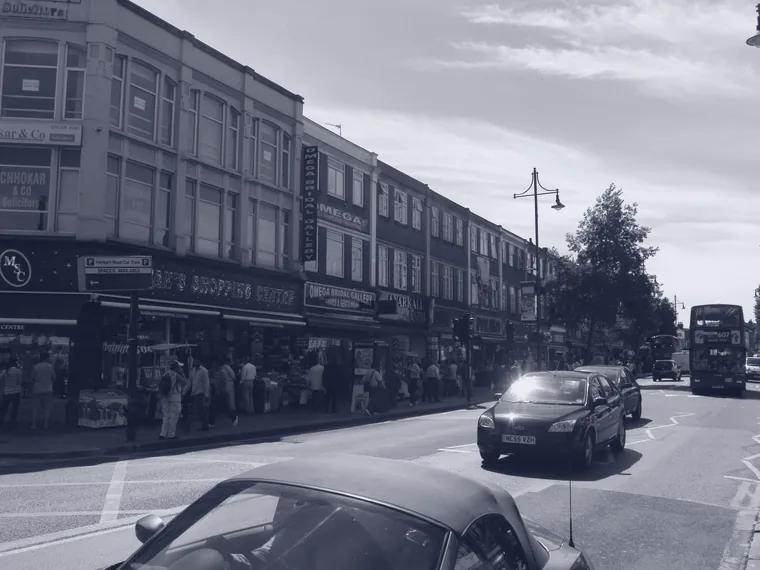
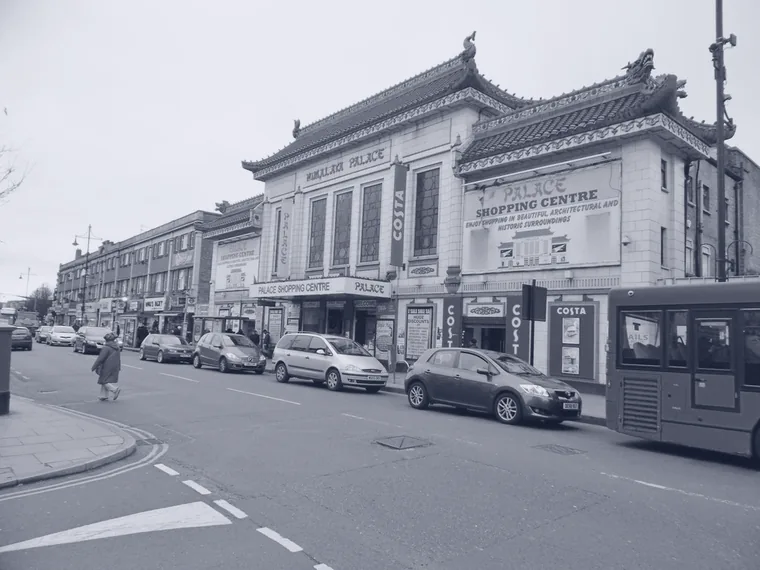
A town people travel to. The Broadway is a destination shopping street. And on Havelock Road stands Sri Guru Singh Sabha, opened in 2003 at a cost of £17.5 million, with room for three thousand and more than fifteen thousand visitors a week — the largest Sikh gurdwara institution outside India.
Which is why this page spends so long on where a vehicle can stand. Southall was built as somewhere people went to work. It is now somewhere coachloads of people arrive, and the streets have not been rebuilt to match.
Tell us the address and the group size and we will tell you the nearest place a coach can honestly wait — and when it should come back.